
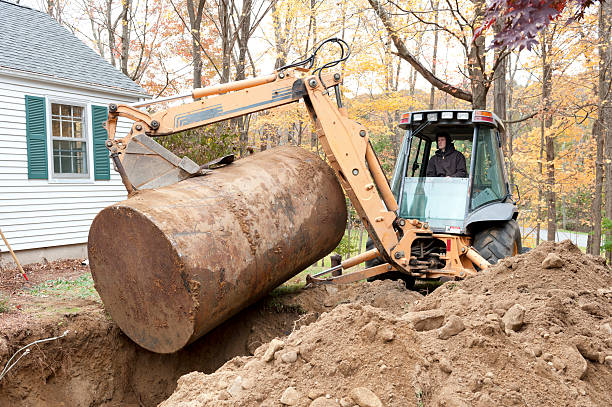
Recognising When a Tank Needs Replacing
The condition of a domestic oil storage tank deteriorates gradually over time, and the outward appearance of a tank can be deceptive. A tank that looks acceptable from a distance may have developed internal corrosion, hairline cracks at seams, or deterioration at fittings that is not visible without a closer inspection. Relying on visual appearance alone to assess tank condition is not sufficient for tanks that are approaching or have exceeded their design life.
Plastic oil tanks have a typical service life of around ten years, though this varies with the quality of the original installation, the exposure conditions, and the care taken during use. UV degradation, impact damage, and chemical attack from contaminated fuel can all shorten the lifespan of a plastic tank. Any tank over ten years old should be formally assessed, and tanks over fifteen years old are generally considered to have exceeded their design life.
Steel oil tanks are more durable than plastic in some respects but are more susceptible to corrosion, particularly at the base where condensation and water can accumulate. A steel tank that has been in service for more than twenty years, or one that shows any rust staining at joints or fittings, should be inspected by a professional before the next heating season.
Unexplained increases in oil consumption — where significantly more fuel is being used than in comparable previous periods — can sometimes indicate a slow tank or pipework leak. Comparing annual delivery volumes over several years, accounting for differences in winter temperatures, provides a straightforward way to identify consumption patterns that warrant further investigation.
Where a tank has been involved in a previous contamination event, even a minor one, its continued suitability for service should be formally assessed. A tank that has leaked once carries an elevated risk of a further release. Replacement in this circumstance is often the most prudent course of action, and many insurers will require it as a condition of reinstating cover.
Tank Service Life and Design Expectations
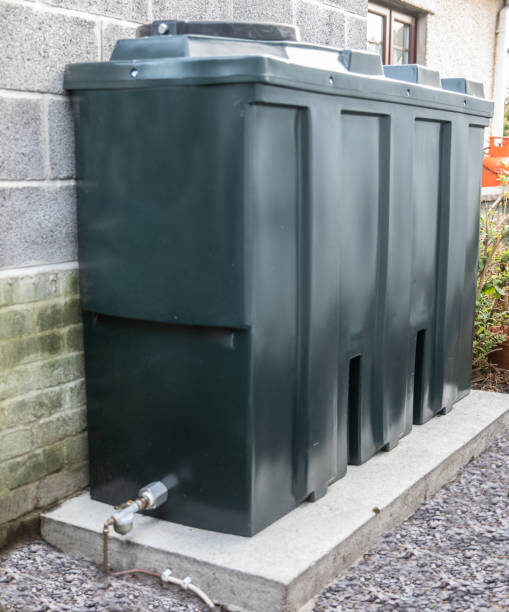
The service life stated by a tank manufacturer represents the expected performance under normal operating conditions with reasonable maintenance. In practice, tanks that are well maintained, protected from physical impact and UV exposure, and used with good-quality fuel will often exceed their stated service life. Conversely, tanks that have been neglected, installed on a poor base, or exposed to harsh conditions may fail well before the manufacturer's expectation.
Regular visual inspections, combined with prompt attention to any defects identified, are the most effective way to maximise the service life of an oil storage tank. A small crack in a fitting that is addressed when first spotted may add years to the life of an otherwise sound installation. The same defect left unattended may lead to a release and necessitate immediate replacement.
Planning for the eventual replacement of an oil storage tank, before it reaches the end of its service life, is significantly preferable to waiting for a failure to force the issue. A planned replacement, scheduled for a period of low heating demand, with time to obtain quotes and select a contractor, produces a better result at lower cost than an emergency replacement carried out in adverse conditions.
What a Professional Tank Inspection Covers
A professional tank inspection involves a systematic external examination of all accessible surfaces, fittings, and pipework connections. The inspector will check for rust, cracking, deformation, and staining that might indicate current or previous leakage, and will assess the condition of the tank base and the security of all fittings. A written report with photographs provides a permanent record of the tank's condition at the time of inspection.
Internal inspection of a domestic oil tank is more difficult than external inspection and typically requires the tank to be emptied and cleaned before entry or use of an inspection camera. For tanks where the external condition is uncertain or where there is evidence of internal sludge accumulation, an internal inspection provides information about the condition of the tank lining that cannot be obtained any other way.
The bund space of a double-skin tank should be checked as part of any professional inspection. The presence of oil in the bund indicates that the inner tank has been leaking, potentially for some time. The volume of oil in the bund gives an indication of how long the leak has been ongoing and how much oil may have been released in total.
Installation Quality and Best Practice
The standard to which a domestic oil storage installation is designed and built has a direct bearing on its performance, longevity, and safety throughout its service life. An installation that uses correctly specified components, follows accepted best practice for siting and base construction, and is commissioned by a qualified installer will consistently outperform one that has cut corners at any of these stages.
Installation quality is not always visible at a glance. Two tanks of identical specification can produce very different long-term outcomes depending on the care taken during base preparation, pipework installation, and the fitting of safety devices. Engaging an installer with a verifiable track record and asking for references from comparable previous projects is the most reliable way to ensure the quality of the work before it begins.
The base on which an oil tank sits is one of the most important and most frequently neglected elements of a domestic installation. A properly constructed concrete plinth, sized correctly for the tank, laid level on a stable substrate, and finished with adequate drainage around its perimeter, supports the tank evenly, prevents water accumulation beneath it, and provides the stable foundation that the tank requires to perform correctly throughout its service life.
Secondary containment, whether provided by a bunded tank or an external containment tray, is the most important single feature of a well-specified oil storage installation. Its purpose is to ensure that any oil released from the primary containment is captured before it can reach the ground, transforming a potential contamination event into a managed, recoverable situation. No other single design feature provides a comparable reduction in risk.
The fire valve fitted to the oil supply line is a critical safety device that must be correctly specified for the flow rate and pipe diameter of the supply system, installed as close as possible to the tank outlet, and confirmed as operational before the system is commissioned. A fire valve that cannot be shown to be functional at the time of installation provides no protection and should be replaced before the system is put into service.
Meeting and Exceeding the Minimum Standard
Best practice guidance for oil storage installations is developed and updated by industry bodies, insurers, and standards organisations to reflect advances in tank technology, changes in understanding of environmental risk, and lessons learned from contamination incidents. Following current best practice, rather than simply meeting the minimum acceptable standard, reduces the likelihood of a release occurring and positions the installation favourably in the event of any insurance or professional scrutiny.
The gap between a minimum-compliant installation and a best-practice installation is often small in cost terms but significant in terms of risk. The difference might be a bunded tank rather than single-skin, a remote monitoring alarm rather than a local-only audible device, or a concrete base with proper drainage rather than a basic slab. These incremental improvements compound over the life of the installation into a meaningfully lower risk profile.
Documenting the specification of a new installation, recording the tank make, model, and capacity, the base dimensions and construction, the pipework material and routing, the safety devices fitted, and the date of commissioning, creates a permanent reference that supports maintenance decisions and provides an accurate starting point for any future assessment of the installation.
Insurance Cover for Oil Storage Installations
Insurance policies covering heating oil storage vary considerably in the scope of what is covered and the conditions attached to that cover. Some policies cover sudden and accidental leaks only; others extend to gradual releases or seepage. Understanding what your policy covers — and what it excludes — is important for managing the financial risk associated with oil storage, and for ensuring that the installation is maintained in a way that keeps the cover valid.
The installation of a bunded tank with an interstice alarm is viewed favourably by most insurers and may attract a lower premium than an equivalent single-skin installation. Where an insurer offers a premium reduction for improved secondary containment, the saving over the life of the policy may offset a significant portion of the additional cost of the bunded installation.
Where an insurance claim is made in relation to an oil storage installation, the insurer will typically inspect the installation as part of the claims process. An installation that is not in accordance with the current standard, or that has not been maintained in accordance with the policy conditions, may result in the claim being reduced or refused. Maintaining the installation to a good standard, and keeping a record of maintenance activities, protects the policy.
Base Construction and Installation Standards
The base on which an oil tank sits is a critical element of the installation. It must be capable of supporting the full weight of a filled tank without settling or cracking, must be level to ensure that the tank sits correctly and that all fittings are under normal load, and must be constructed from non-combustible materials. A base that does not meet these requirements creates conditions for both structural failure and accelerated tank deterioration.
The existing base of an installation being replaced should be inspected before the new tank is positioned. If the base has settled, cracked, or deteriorated, it should be rebuilt rather than reused. Installing a new tank on a compromised base is a false economy — the new installation will be affected by the same problems as the old one, and any resulting damage or release will not be covered by the tank warranty.
Pipework connecting the tank to the boiler should be inspected as part of any tank replacement project. Older copper pipework that has been in service for many years may have developed hairline cracks, weakened joints, or sections of significant corrosion that are not visible externally. Where the condition of existing pipework is uncertain, replacing it as part of the tank installation project is the prudent course of action.
The commissioning of a new oil storage installation involves confirming that all connections are secure, that the fire valve is operational, that the gauge is correctly calibrated, and that the bund alarm — if fitted — is functioning. This check should be completed before the tank is filled and before the boiler is returned to service. Commissioning that is rushed or incomplete risks leaving defects in place that may lead to a release or a boiler fault.
A replacement tank project managed by an experienced installer will typically be completed in a single day for a standard domestic installation, leaving the heating system operational by the end of the visit. Communicating the expected programme to the household in advance allows the occupants to make any necessary arrangements and reduces the disruption associated with the works.
Oil Supply Pipework Materials and Routing
Copper pipe is the traditional material for oil supply lines in domestic installations and remains widely used. It is durable, corrosion-resistant, and easy to work with. However, copper pipework that has been in service for many years can develop work-hardening at bends, leading to cracking under vibration, and the soldered joints used in older installations are more vulnerable to failure than modern compression or push-fit fittings.
Flexible reinforced hose is commonly used for the final connection between the rigid supply line and the boiler, where vibration from the burner motor would otherwise stress a rigid connection. This hose has a limited service life and should be replaced at the intervals recommended by the manufacturer, or when any signs of surface cracking, discolouration, or deterioration are observed. Flexible hose that is overdue for replacement is a common source of minor leaks in domestic oil systems.
Underground oil supply pipework — where the line between the tank and the boiler runs below ground for part of its length — requires careful attention during any inspection or replacement project. Underground sections are not visible for routine inspection, are more vulnerable to ground movement and root damage, and can fail slowly without the leak being immediately obvious. Where underground pipework is of uncertain age or condition, its replacement should be considered as part of any tank replacement project.
Installer Qualifications and Workmanship
Oil tank installation is a skilled trade requiring knowledge of the relevant standards, practical experience in groundworks and pipework, and familiarity with the specific requirements of the equipment being installed. A contractor who installs tanks regularly as part of their core business will have developed the competence and efficiency that comes from repetition; a contractor who installs tanks occasionally alongside other work is more likely to miss details that matter.
Verifying that an installer holds the relevant trade qualifications and carries adequate insurance — including public liability and professional indemnity cover — before work begins protects the property owner in the event that something goes wrong during or after the installation. Asking for copies of these documents is a reasonable and entirely standard request that a professional installer will be able to satisfy without hesitation.
The installation documentation for an oil storage system, including the original specification, base construction details, commissioning record, component warranties, and any subsequent inspection reports, forms the authoritative reference for the installation throughout its service life. Keeping this documentation together, accessible, and up to date is one of the simplest and most valuable things a property owner can do to support effective long-term management of the system.
